Monday, September 23, 2013

Mississippi River Skiff under power

The beautiful September weather got us motivated to try out a new spot.  We drove over to Horse Shoe Lake State Park near Collinsville ILL.  With Sunday traffic it only took 30 minutes.  It is exactly 26 miles from our front door.  It is a pretty lake with lots of access.  There is a 50 hp limit and it is mainly used by folks fishing.
We got the skiff in and finally got some video of it under power.
Here it is...


Sunday, September 8, 2013

New Board: Powder Blue

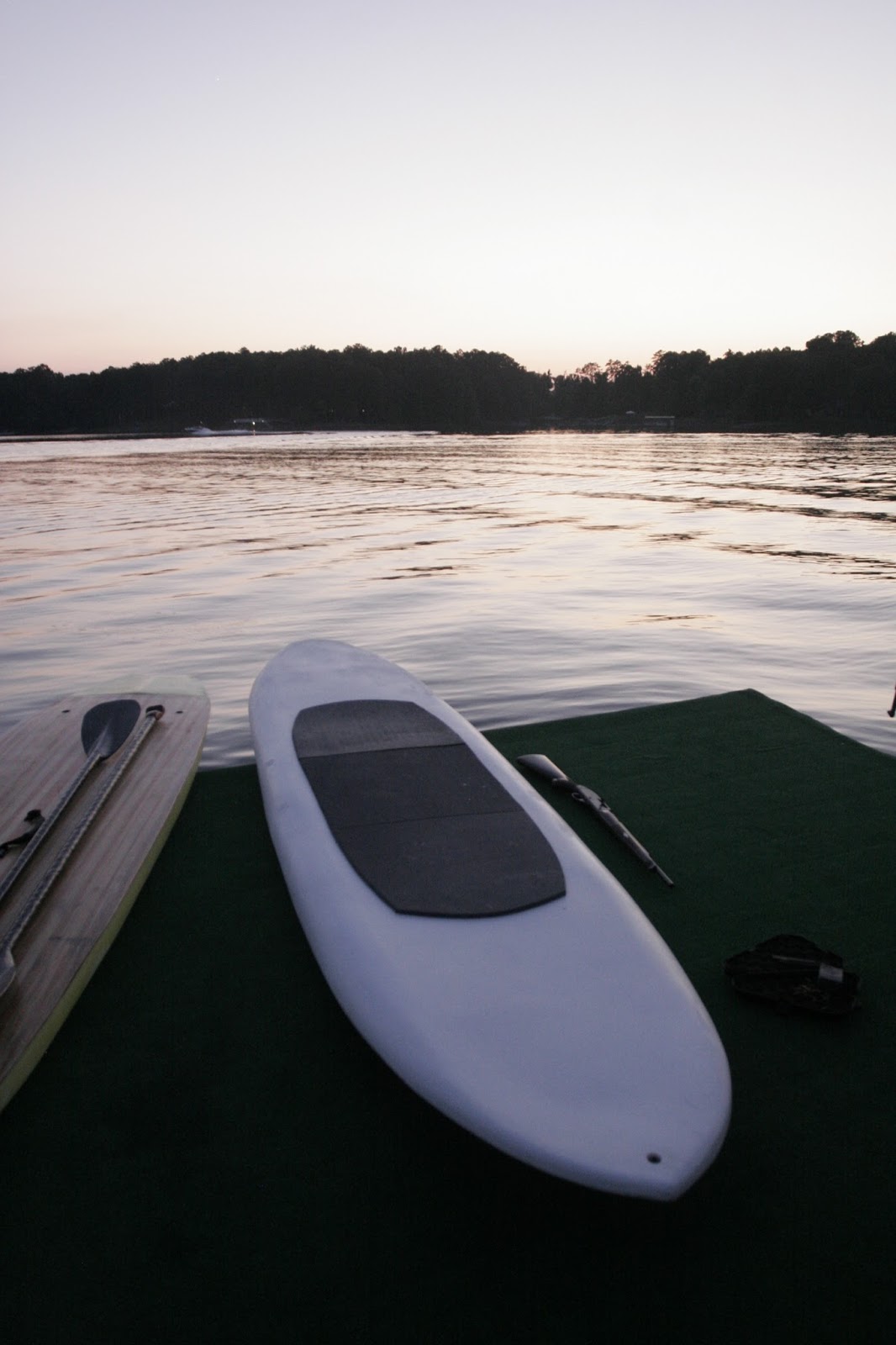
We finished a new Sea State 10.5 SUP this weekend.
It is a Powder Blue hull with a poplar and Cedar deck.
This board features our latest improvements including a flush deck edge with a glass wrap and carbon fiber tube internal supports.
It also has all of our standard features including hollow construction, deck access plate for storage, a webbing handle, three leash cups / tie downs, a high quality 9 inch Dorsal fin and an EVA pad.

Here are some photos:


Wednesday, August 28, 2013

Polynesian Outrigger Paddles

The paddles we were commissioned to build are ready.
They will be decorative items but are built for the water.  Koa is one heavy wood.  Those outrigger crews must have been strong!

Here are photos of the process...


Handle pieces with hardwood dowel visible.
Blades shaped, before routing the shaft.


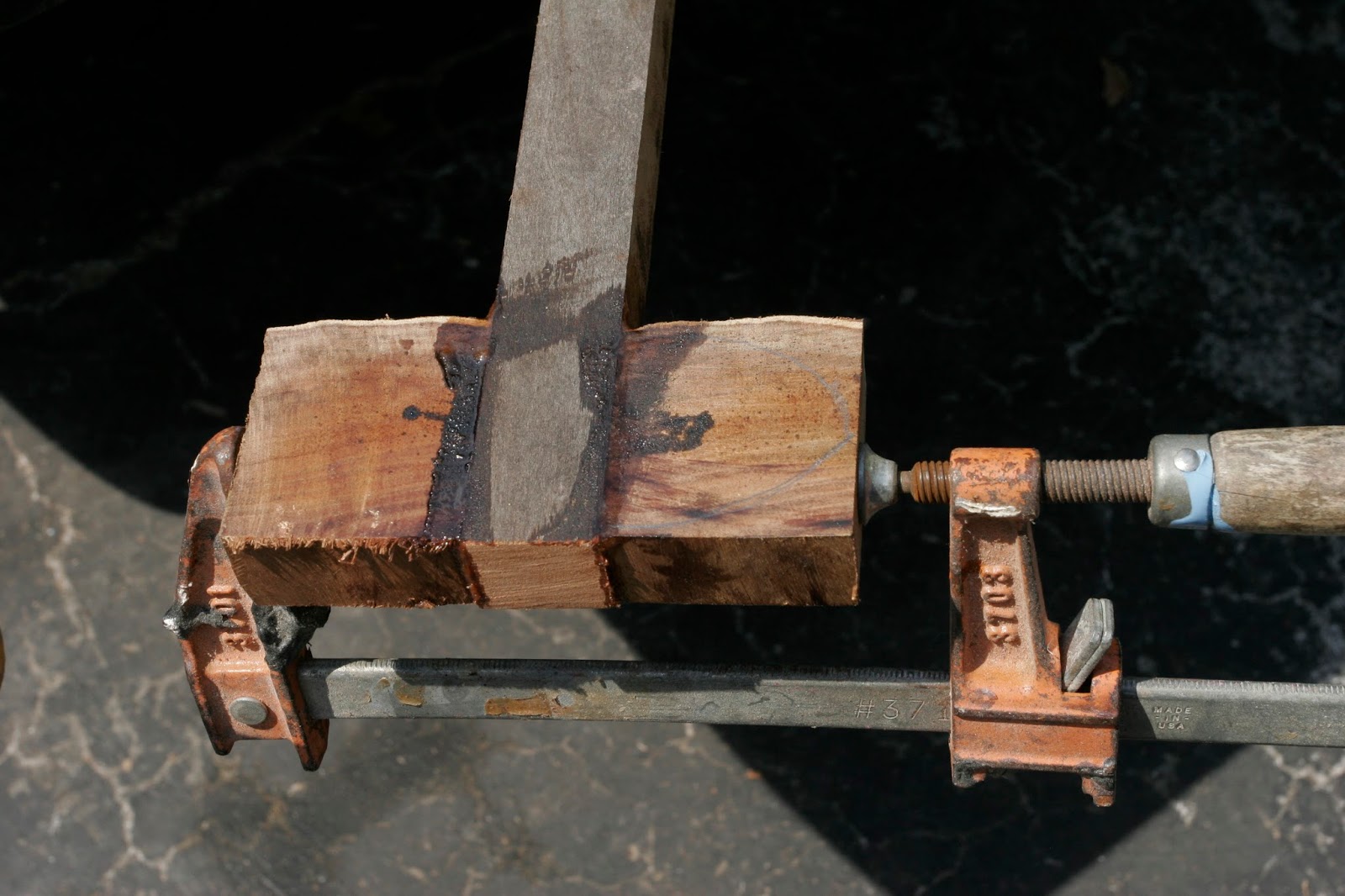
Epoxying the koa handles to the cherry shaft.

Fully shaped and rounded.  Ready for finish.
The depressions on a truck's tailgate are intended for Linseed oil.  Most people don't know that.


Oiled wood not yet varnished
Applying linseed oil brings out the beautiful patterns in the Koa.


After several coats of spar varnish.  Ready for a trip to the next island.

Tuesday, August 27, 2013

USCG certified capacities for the MRS

After a few back and forth e emails with the Coast Guard clarifying the formulas, we have the certified Maximum Capacity numbers for the Mississippi River Skiff.
They are as follows:

MWC  717 pounds
MPC    497 pounds (calculated with a 20 HP motor)  This is Person Capacity
 Number of Persons  4
 Maximum Horse Power  20

As we ran through the numbers we found the size and width of the skiff could handle up to a 35 hp motor.  But through our testing we felt it should be limited to a 20hp to keep the stern from squatting too much.
So if we limited the HP to 20 the formula allows for more person capacity.  This brought us up to 3.75 persons.  With the addition of 3.15 cubic feet of flotation, the skiff is certified for these numbers.  We will be adding floatation this week.
The USCG has tables for calculating engine. battery and fuel tank weights.  To see them, follow this link:
uscgboating.org/regulations
Or This one:
Gov Printing Office How you arrive at these figure is as follows:


Sunday, August 18, 2013

Sinking!

We received our Manufacturers ID from the Coast Guard awhile back.
Our ID is "SEA", awesome.
Any builder of boats has to register with the Coast Guard and meet regulations for safety.
On our application we listed the Mississippi River Skiff as one of our models.  We have since decided to move on to the next design and not produce additional hulls of the MRS.
The de-watering with a submersible sump
Filler up!
But the Coast Guard, now under the auspices of Homeland Security called and wanted us to certify that the MRS meets regulations.
To do this there are calculations that need to be done.  They all start with the maximum capacity of the craft.  This is the weight that sinks the boat to the shear line.
  

To do this we hauled the skiff over to the pool at the house of our friends the Walters.  We shot a video of the whole sinking that we were going to compress into a high-speed clip. Unfortunatly the battery died and corrupted the file.
We did have a successful sinking.  The skiff stayed in trim and evenly sank to its shear line until water spilled in and out but would sink no further.
There are no floatation compartments.  It is simply built of wood encapsulated in a glass/epoxy skin.
It took 72 minutes at a flow rate of 6.451 gpm.
This equals 464.472 gallons.
At 8.33 pounds per gallon, the maximum capacity is 3,869.052 pounds!
We will tackle the rest of the Coast Guard calculations tonight.


Sunday, August 11, 2013

Back to our roots: wooden paddles

We received a commission to make two outrigger paddles.
The client purchased some beautiful Koa wood on a trip to Hawaii and it just recently arrived.
The wood will make two figured blades and handle pieces.
The Koa blank is 3 inches thick 20 inches long and about 9 inches wide with a bark edge.

Today we cut the blank down to 4 blade parts of 5/8 ths thick and 4.5 inches wide.

The off-fall will be cut to make the handles.  The remainder will be returned to the customer for future use.  This stuff is beautiful and precious!


With Cherry shafts cut


Tuesday, August 6, 2013

Mystery board


We had an inquiry about the all glass board in some of our photos.
It is not for sale.  It is a model we developed in association with Shane Perrin as a prototype.
Shane is an accomplished SUP distance racer with several amazing records under his belt.
This spring he paddled from Tampa to Key West!
Together we developed a big stable board for river paddling.  Shane has since been picked up as a sponsored rider for Glide SUPs and we ended our development process.
We did manage to make a great paddling board and sold three before the plug was pulled (actually it was cut up).

Doing a little gunboatin down in Bama.
We at Sea State are going to use the design concepts we developed on this prototype and begin an new hollow all glass board project in the coming weeks.

Stay tuned...


Monday, August 5, 2013

SUP Delivery


We delivered a set of SUPs and paddles to Tree house Marina near Cullman Alabama.
This was a big order for us and through the process of making the boards in quantity instead of one at a time, we developed some improvements.
Earlier boards had internal stringers of glass laminated ply running the length of the board,  This was sturdy but heavy and it is totally out of site once the board is together.   This means there is no way to inspect it.  I wanted to lighten the hull and happened upon using the carbon fiber tube we manufacture.
So now all Sea State SUPs are built with Carbon Fiber tube internal supports.  They are incredibly strong in compression and of course light and water proof.
This was a big improvement.
We also moved from pre-glassing the top decks to glassing in place.  This removed a step and it turns out also improves the appearance.

Here are some photos:

4 of our boards on the dock at Tree House Marina in Alabama


Our raw carbon fiber tube

New paddles prior to their gloss coat


Saturday, July 20, 2013

Tuesday, July 16, 2013

New shop / new plan

We have been off the computer awhile enjoying summer.  I had the fun job of taking our youngest son to Camp Sea Gull in North Carolina.  We had never seen it but heard it was the place to go for sailing.  Wow, what a place. A beautiful setting on the Neuse river near Pamlico sound and the facilities are first class !  Boats every where.
Check out this link:
http://www.seagull-seafarer.org/
After a great trip to North Carolina we packed up our shop and home and moved to a nicer home slightly closer in the the city.  It has plenty of room for the boats and the shop space is functional too.
We are setting up a small part shop in a large utility area and the big molding will take place in a two bay garage.
Our first order of business is beefing up our shafts.  We had a couple of failures so we are reworking the layup schedule.  The first new test shafts feel much stiffer.  We put more CF tow under tension as the first layer of the shaft.
We will break some to see the difference.

We registered with the Coast Guard as a boat manufacturer and received the Manufacturer's code:
S E A
How about that!  It wasn't taken.
SeaNymph was the previous manufacturer with the designation but it has been out of business over 10 years.
Ron Hassler of PPG Marine gave us a visit on behalf of the Coast Guard to inspect our operation and see about compliance to safety regulations.
In our application we listed the Mississippi River Skiff as one of our boats.  In order to sell the skiff we have to calculate the capacities and powering of the craft.
Ron walked us through the calculations.  The Coast Guard has formulas that are based on the maximum capacity of a boat (the weight needed to sink it in still water). To get and accurate number for the maximum capacity,  the easiest way to figure it is to get a flow meter, fill the boat to sinking in a pool or pond.  Then when you have the water volume, calculate the weight (fresh water is 8.34 pounds to the gallon).
We will do this and properly label the boat before a sale.
The MRS is a great boat but for our next boat we are interested in a molding project.  In a future post we will share some of the ideas we are working on.


Friday, May 31, 2013

Summer fun !

Finally we got out of the shop and onto the water!
Here are some photos...


GRUNT !


Sunday, May 12, 2013

Pretty Bird !

We finished a new Sea State SUP today.  This one is a light canary yellow.
When we were spraying in the gel-coat, we weren't sure if we would like it.  But wow, we like it a lot.

It looks great with the wood deck.  We installed three tie downs on this board and it also has the in deck storage.  We might make a few of this color before we move down the rainbow.


Trimming the edge

Yellow Sea State SUP

Rear deck tie downs
New Cahokia paddle

Preparing to instal the deck hatch.


Our next color?